 The Soviet Files
The Soviet Files
Four illustrated field guides to everything the Soviet Union sealed, sank, buried or dug up — and what the West found when the doors finally opened.
The bunkers the CIA found. The technologies that vanished. The experiments left in the Arctic ice. The things Soviet drills and shovels found deep underground. 396 stand-alone entries, drawn from the declassified record — with every disputed claim marked as disputed.
Real Voices
“I live two hours from the Kola peninsula and I thought I knew the stories. Buried in the Arctic taught me about the seventeen thousand containers put into the sea off Novaya Zemlya. I read that chapter twice, then read it to my brother.”
 Viktor S.61, Murmansk
“My father worked at a factory that did not officially exist. Hidden Soviet Bunkers is the first book that explained what a closed city actually was — and the chapter on the fake bunker made me laugh out loud, because it is so exactly how they did things.”
 Galina M.58, Kazan
“I bought Deep Underground for the Kola borehole and stayed for the frozen tombs of Pazyryk. What I respect most: the last section tells you plainly which famous stories are not true. That is why I trust the rest.”
 Dmitri K.52, Novosibirsk
They built it to be forgotten.
For seventy years the Soviet Union dug, sealed and classified on a scale no other state has attempted. Command posts under Moscow. A railway that officially does not exist. Whole cities left off every map. Submarine pens cut into mountains. Laboratories on an island in the Aral Sea. Machines built once, flown once, and rolled into a hangar in 1974 with the doors closed behind them.
Then 1991 happened. Archives opened — some of them only briefly. Officers talked. Expeditions went north and found what the ice had kept. And a great deal of what Western analysts had spent decades guessing at from satellite photographs turned out to be stranger than the guesses.
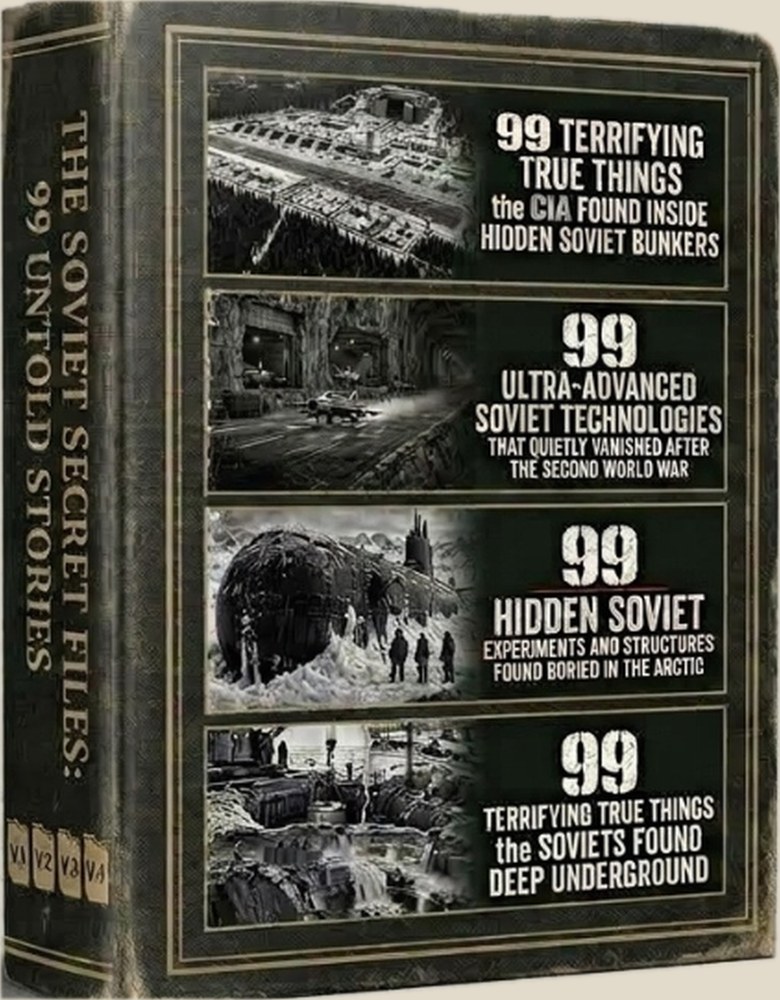
The Soviet Files is that record, organised into four books of ninety-nine entries each. Every entry stands alone: a header block with the site or programme, its location, the years it was active — then what was there, how the West found out, and what was found when someone finally went inside. Read them front to back, or open anywhere and read one before bed.
The Difference
| The Soviet Files | Free videos & forums | Typical “Soviet secrets” books | |
|---|---|---|---|
| Sources | Declassified US intelligence, the CIA FOIA reading room, post-1991 Russian disclosures, expedition reports | Usually unstated | Often other popular books |
| Disputed claims | Marked as disputed, single-source or estimated — every time | Presented as fact | Rarely flagged |
| The myths | Named and taken apart (the “Well to Hell”, lost underground races) | Repeated | Often the selling point |
| Scope | 396 entries: bunkers, technology, the Arctic, the deep ground | One story at a time | One topic, padded |
| Format | Illustrated PDF — phone, tablet, laptop or print. Yours to keep | Disappears when taken down | Hardback prices |
| Price | $29.99 for all four | Free — with ads | $20–35 each |
What’s Inside
Four volumes. Nine sections each. Here are the real contents.
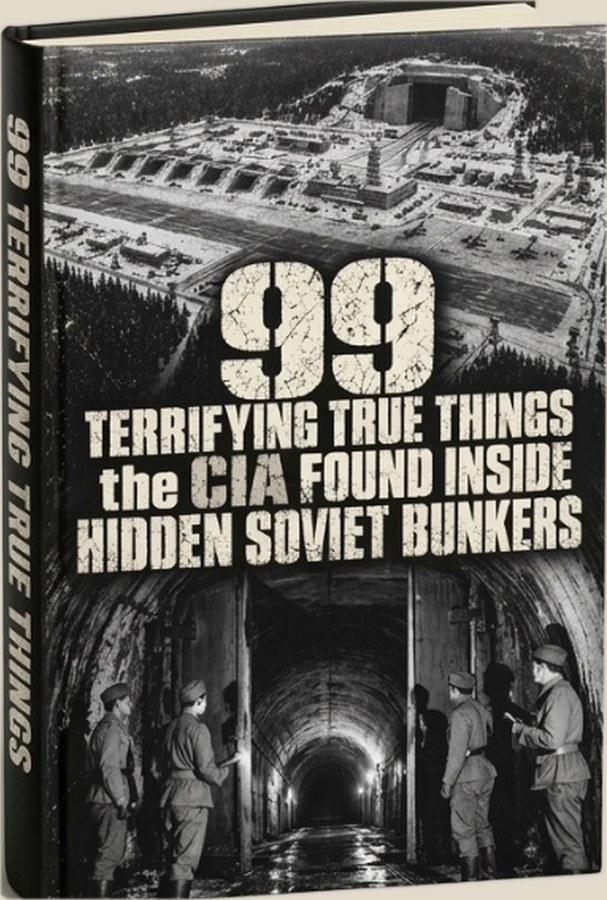
99 Terrifying True Things the CIA Found Inside Hidden Soviet Bunkers
Inside the sealed bunkers Moscow insisted were empty — the rooms, the machines, and the paperwork left behind when the last men walked out and locked the door.
- I.The Command Posts Beneath MoscowThe railway that officially does not exist · Ninety days of air
- II.Inside the MountainsThe mountain they never stopped digging · The town on the roof
- III.The Cities That Were Not on the MapArzamas-16 · Counting bakeries from orbit
- IV.The Caverns by the WaterThe mountain with submarines inside it
- V.The Machines They BuriedThe system called Perimeter · The machine that was never turned off
- VI.The Sealed LaboratoriesThe island in the Aral Sea · Kantubek, left as it stood
- VII.The Ground They Poisoned On PurposeThe lake they made with a bomb
- VIII.What the Silos HeldThe train that looked like freight · Two men, two keys, one room
- IX.What Was Left BehindThe lighthouses that ran on plutonium · The door closed from the inside
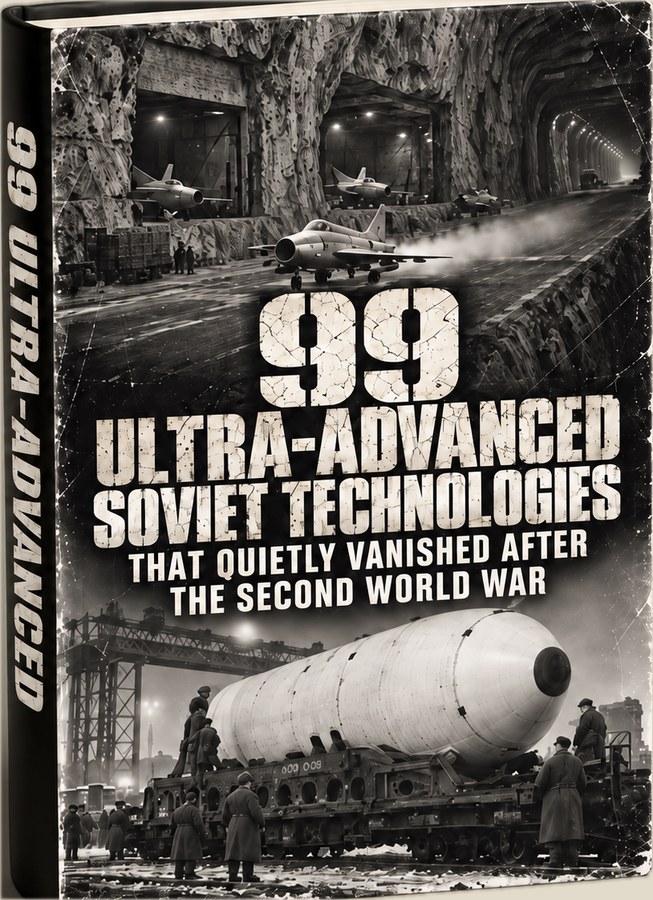
99 Ultra-Advanced Soviet Technologies That Quietly Vanished After the Second World War
The machines the USSR built once, flew once, and never built again — and the reasons they went into a hangar in 1974 and never came out.
- I.What Came Out of GermanyThe night they took two thousand engineers
- II.The Aircraft That Were Never RepeatedA hundred tonnes of titanium at Mach 3
- III.Wing, Hull and Surface EffectThe missile carrier that skimmed the sea · Forty-four knots, underwater
- IV.Reactors in Strange PlacesThe aeroplane with a reactor in the back
- V.The Computers That Went the Other WayThe computer that counted in threes · The Soviet internet that was refused
- VI.The Space Programme That Was CancelledThe shuttle that landed itself · The only gun ever fired in orbit
- VII.The Weapons That Broke the RulesThe torpedo that travels in a bubble · The tank with four tracks
- VIII.Instruments and the Quiet SciencesThe bug with no power supply · The machine that drove on screws
- IX.Why They Vanished14 January 1966 · The last flight
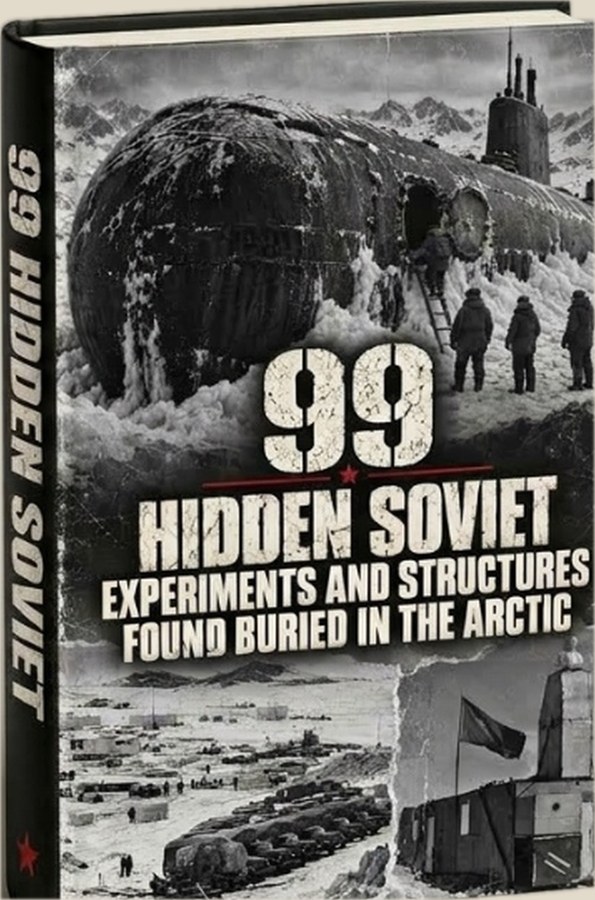
99 Hidden Soviet Experiments and Structures Found Buried in the Arctic
What the Soviet Union built, tested, sank and abandoned above the Arctic Circle — and what the thawing ground is handing back.
- I.The Route and the IceFour men on a floe for nine months
- II.Cities on Frozen GroundThe metals city at sixty-nine north · The laboratory cut into the ice
- III.What the Camps Left BehindNorillag · Construction 501 · The road built on its builders
- IV.The Range at the Top of the WorldThirty October 1961 · The tunnels at Matochkin Shar
- V.What Was Put Into the WaterSeventeen thousand containers · The submarine they sank on purpose
- VI.Listening Under the PoleComing up through the ice · The airfields on the ice
- VII.Holes in the PermafrostThe crater full of diamonds · A nuclear explosion to build a dam
- VIII.What the Ice KeptDima the mammoth · The bacteria that woke up
- IX.What Is Coming Up NowThe hole that is eating the hillside · The generators still unaccounted for
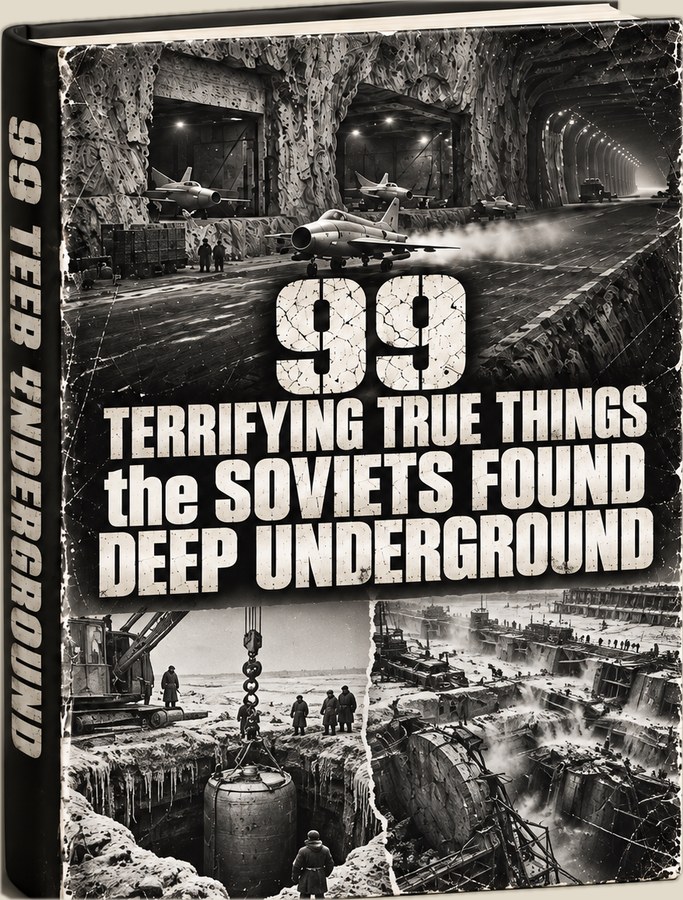
99 Terrifying True Things the Soviets Found Deep Underground
Boreholes, caves, mines and graves — what came up when the Soviet Union dug, and what it cost to go and look.
- I.The Boreholes and the BasementSix kilometres down, something that had been alive
- II.Into the KarstThe mountain with the deepest caves in the world
- III.What the Miners HitThe outburst · The seams that are burning
- IV.Hands on the Cave WallA finger bone and a new kind of human
- V.The Frozen TombsPazyryk · The tattooed man · The oldest carpet in the world
- VI.What Was Under the SandThe hill of gold · The hoard that vanished for 25 years
- VII.Water, Gas and FireThe hole that is still burning · The lake under four km of ice
- VIII.The Living DarkThe deep biosphere · The Elephant’s Foot
- IX.What Was Not Down ThereThe Well to Hell · Metro-2 · What is still down there
About the Files
The Soviet Files are assembled from the open record: declassified United States intelligence assessments, the CIA’s Freedom of Information Act reading room, the National Security Archive, the Russian government’s own post-1991 disclosures, joint Russian–Norwegian expedition reports, design-bureau histories, and the published testimony of the officers, engineers and scientists who were there.
The rule throughout is simple. Where the record is solid, the entry says so. Where a figure is disputed, rests on a single source, or is an estimate rather than a count, the entry says that too. And where a famous story turns out to be false — the “Well to Hell”, the lost underground races — the book tells you, and tells you why.
The result is four books that read like the files they are named after: short, specific, and much stranger than the rumours.
Questions
Is this history or conspiracy theory?
History — told the way an intelligence file would tell it. Each entry is built from the declassified and published record, and anything disputed or single-sourced is labelled that way on the page. The strangest entries are strange because the record is; the books never need to invent anything. The final section of Volume 4 is devoted entirely to what was not down there.
I can find Soviet stories free on YouTube. Why buy these?
Because a video gives you one story at a time, with no sources and no way to check it. These give you 396 of them, organised, cross-referenced, illustrated and indexed — with the disputed parts marked. And they are yours: offline, no ads, no algorithm, nothing taken down.
Why only $29.99 for all four?
It is the launch price for the complete collection. Bought one at a time the four volumes are $17 each — $68 in total. The bundle saves you $38.01.
What format are they, and how do I get them?
Illustrated PDFs of 140 pages each. Checkout is handled by Gumroad; you get the download link on screen and by email the moment you pay. They open on any phone, tablet, e-reader that supports PDF, or computer — and they print well.
Can I buy just one?
Yes. Each volume is $17 on its own — use the buttons in the selection at the top of the page or under each volume above. If you think you will want two or more, the collection is the better deal.
Are the books suitable for anyone?
They are written for adults. Several entries deal plainly with fatal accidents, the camp system and mass death. Nothing is sensationalised — the record does not need it — but nothing is softened either.
Open the Files
All four volumes. 396 entries. One download.
Get all four files — $29.99